
Hokkaido is one of Japan’s premier resort destinations, known for its vast natural landscapes, stunning scenery through all four seasons, and rich food culture featuring fresh seafood and produce. Just a 90-minute flight from Tokyo, the region offers excellent accessibility. In summer, visitors are drawn to its cool highlands and expansive flower fields, while in winter, world-renowned powder snow makes its ski resorts especially popular. In recent years, with the rapid growth of inbound tourism and the impact of a weaker yen, Hokkaido has also gained attention from wealthy global investors as a promising destination for real estate investment.
As of 5 March 2026, Hokkaido’s highest sale prices are concentrated in selected wards of Sapporo. The top five areas by average sale price per square metre are Kita Ward (JPY 526,500), Chuo Ward (JPY 360,500), Atsubetsu Ward (JPY 338,900), Higashi Ward (JPY 294,800), and Shiroishi Ward (JPY 257,300). For investors, this spread is significant. The same budget can secure very different asset sizes and tenant profiles depending on the ward.
Rental levels vary sharply by location and layout. Chuo Ward posts the strongest headline rents, with averages of JPY 35,900 for a studio, JPY 58,700 for 1LDK/2K/2DK, JPY 108,600 for 2LDK/3K/3DK, and JPY 153,600 for 3LDK/4K/4DK. Kita Ward, despite the highest acquisition price, records JPY 31,300 for a studio, JPY 51,300 for 1LDK/2K/2DK, and JPY 92,900 for 2LDK/3K/3DK.
Among the lower-entry options in the top five, Higashi Ward combines JPY 294,800 per square metre with rents such as JPY 29,100 for a studio and JPY 66,400 for 2LDK/3K/3DK. Shiroishi Ward, at JPY 257,300 per square metre, remains one of the more affordable areas, with JPY 34,000 for a studio and JPY 46,500 for 2LDK/3K/3DK. From an investment perspective, the pattern is clear: Chuo supports stronger rent levels, while Higashi and Shiroishi offer a lower acquisition threshold for buyers focused on entry price discipline.
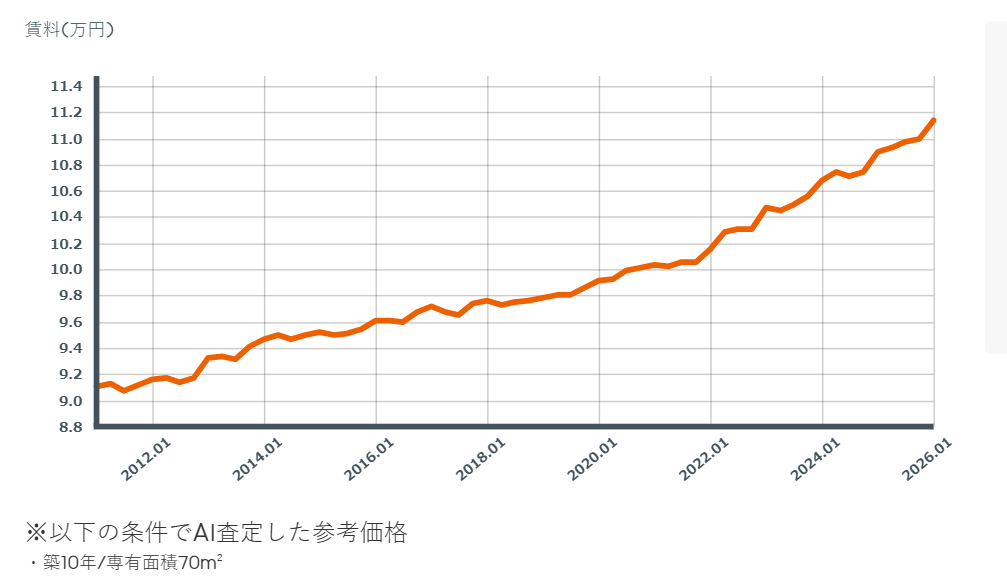
Hokkaido’s rental market is showing clear upward momentum. According to LIFULL HOME’S, the standard rent for a condominium in Hokkaido rose by about 6.64% over the past three years, with gains recorded in each of the three annual periods. The same source also shows that some local markets are moving faster than the prefectural average, with Chitose, Eniwa, Kitahiroshima, Sapporo Nishi Ward, and Sapporo Atsubetsu Ward ranking among the strongest areas for rent growth. For investors, this matters because rent growth supports the income side of the equation even when acquisition costs are rising.
This trend does not mean every submarket is performing equally well. However, it does suggest that Hokkaido is no longer just a low-entry regional market. In 2026, investors are increasingly looking at Hokkaido as a market where selected locations can offer both relative affordability and improving rental performance. That combination is especially relevant for overseas buyers seeking income potential outside Tokyo’s high-price environment.
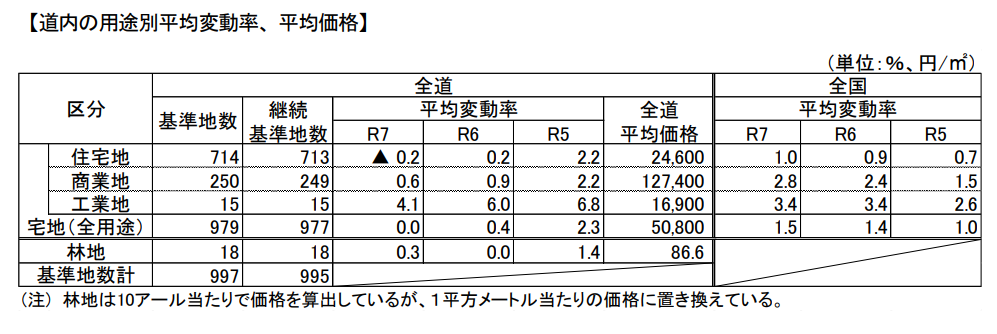
Hokkaido’s land market in 2025 presents a mixed but investable picture. The Hokkaido government’s land price survey shows that residential land values across Hokkaido edged down 0.2%, while commercial land values rose 0.6% for the fourth straight year and industrial land values rose 4.1% for the seventh straight year. The same report notes that commercial land in central Hokkaido has been supported by large-scale semiconductor-related development and the recovery in tourism demand. In other words, the market is no longer moving in one direction across all asset types; location and use are becoming more important.
Sapporo remains the clearest example of this selective strength. In the same survey, Sapporo residential land rose 1.4% and commercial land rose 5.5%, outperforming the Hokkaido-wide averages. At the city level, this is consistent with an urban market benefiting from strong convenience-led demand and ongoing redevelopment around core districts.
Reference coverage on Sapporo also points to continued urban renewal around major nodes such as the station area and central commercial zones, reinforcing the long-term case for well-located assets rather than broad exposure across the entire prefecture.
Singaporeans can buy property in Japan, including Hokkaido, without a nationality-based ownership restriction. However, non-resident buyers need additional documentation for registration and closing. In most cases, this includes proof of identity, proof of overseas address, the sale and purchase agreement, and registration documents prepared by a judicial scrivener. Buyers must also receive an Explanation of Important Matters before signing. If the property will be rented out, appointing a tax representative in Japan may also be necessary.
The main acquisition costs are stamp tax, registration and license tax, and real estate acquisition tax. After purchase, owners should also budget for fixed asset tax and, where applicable, city planning tax. Closing costs may also include judicial scrivener fees, agent commissions, and bank-related charges. Because many of these costs are based on the assessed value rather than the contract price alone, buyers should treat them as a separate part of the acquisition budget.
Yes, but options are limited for non-residents. In Japan, mortgage approval depends more on residency status, income, and bank screening than on nationality. Some banks provide services for international clients, but standard housing loans often require Japan-based documents such as a residence record, registered seal certificate, and local bank account.
As a result, many Singapore-based buyers either purchase in cash or confirm financing eligibility before selecting a property.
Guide to Buy Property in Japan for Singaporeans

Sapporo is home to about one-third of Hokkaido’s population—approximately 2 million people—and is one of the few regional major cities in Japan that continues to see a net population increase. Redevelopment projects are underway in areas such as “Kita 8 Nishi 1” and “Sosei East,” and the planned extension of the Hokkaido Shinkansen to Sapporo by fiscal 2030, along with the expansion of New Chitose Airport’s international terminal, are expected to further boost land values.

Niseko has established itself as a premier long-term stay destination for wealthy foreign visitors, thanks to its world-class powder snow and the presence of international hotel brands. Condominiums and villas typically sell for several hundred million to over one billion yen per unit, and some properties operate under highly profitable models—achieving winter occupancy rates of over 80% and average nightly rates exceeding ¥100,000.
Despite its remarkable success, several factors could potentially challenge Niseko's continued growth and investment appeal.
Demand is heavily skewed toward the winter ski season (December-March), leaving properties largely vacant for eight months yearly. While summer activities like golf and trekking exist, their appeal to international luxury visitors remains uncertain. This seasonality creates operational challenges with year-round costs but compressed revenue periods, requiring careful financial planning and higher peak-season rates.
Luxury condominiums are proliferating rapidly, with multiple large-scale developments adding hundreds of units over the next several years. This raises concerns about future oversupply, potentially making it difficult for owners to maintain premium rates and high occupancy, extending payback periods significantly.
Property prices ranging from hundreds of millions to over one billion yen create extremely high barriers, limiting the buyer pool. Dramatic price increases over the past decade raise questions about future appreciation potential and whether the market "has already peaked."
The two-hour journey from New Chitose Airport limits accessibility compared to urban destinations. While planned infrastructure improvements like extending the Hokkaido Shinkansen are positive, their realization remains years away and depends on significant government investment.
In regional cities, property prices have not surged as much as in Sapporo, and gross yields in the 5–7% range are still attainable. However, investors should factor in the risks of population decline and aging demographics. It’s important to assess whether there are medium- to long-term initiatives in place to support demand, such as municipal tourism strategies and the progress of private redevelopment projects.
▼Horizontally scrollable▼
| Area | Key Investment Considerations | Key Risks |
|---|---|---|
| Hakodate | Growth in International Charter Flights and Cruise Ship Calls; Redevelopment of the Bay Area Driving Demand for Hotels and Commercial Facilities | Declining Housing Demand Due to Population Decrease |
| Otaru | Historic Canal-Side Scenery and Growing Inbound Popularity; Ongoing Efforts to Repurpose Traditional Houses into Boutique Hotels | Risk of Low Visitor Numbers During the Winter Off-Season |
| Asahikawa | Asahiyama Zoo Brand and Role as a Logistics Hub; Station Area Redevelopment Driving Increased Rental Demand | Inland Location Results in Shorter Stays by Tourists |
| Kushiro | Experiential Tourism Expanding Around Kushiro Shitsugen National Park; Urban Revitalization Driving Demand for Redevelopment of Aging Buildings | Harsh Climate and High Winter Costs, with a Trend of Population Outflow |
Professional property management helps protect cash flow after purchase. In Japan, typical management services include tenant recruitment, rent collection, contract administration, repair coordination, inspections, and owner reporting. Some firms also emphasize vacancy reduction through broker networks, corporate leasing outreach, and faster re-listing after move-out. For overseas buyers, this matters because yield is affected not only by purchase price, but also by vacancy time, maintenance response, and day-to-day operational control.
For overseas owners, the most practical support goes beyond basic rent collection. Publicly listed services aimed at non-resident owners include tax representative support, bill payment, mail handling, local contact support, multilingual communication, and remote reporting. Some management providers also position these services specifically for foreign nationals or owners living abroad, which reduces the friction of managing a Hokkaido property from Singapore.
Renovation can improve both leasing speed and rent positioning when it is tied to tenant demand. Public examples from Hokkaido-based operators show one-stop support that combines property search, renovation, and management, while other Hokkaido renovation providers market upgrades as a way to improve guest appeal, space efficiency, and booking performance for rental assets. In practice, the most effective upgrades are usually the ones that make the property easier to lease: better layouts, cleaner interiors, stronger photos, and a more competitive presentation in the local market.
The key to successful investing lies in having access to high-quality information and choosing the right partners. There’s no need to rush into a purchase, but engaging with experts will give you a clearer picture of the market and help you identify specific risks. As a first step toward entering the promising Hokkaido real estate market, we strongly recommend reaching out to a trusted real estate company to gather insights and refine your investment strategy.
3 Trusted Agencies for
Buying Property in Japan
as a Foreigner
We introduce recommended real estate services tailored to your goals—whether you're looking to invest, explore exclusive luxury properties, or find a comfortable home within your budget.
Use this guide to help you make the right choice in Japan’s real estate market.

From brokerage to management and valuation, they offer a wide range of real estate services.
Backed by Nomura Securities' network and insights, they enables investment-focused proposals that take into account both current returns and long-term growth potential.
Major metropolitan areas across Japan
(Tokyo 23 wards, Nagoya, Osaka, Kyoto, Kobe, Sapporo, Fukuoka, etc.)

The first and only partner in Japan (*1) of Forbes Global Properties, an international luxury platform that only allows membership to top real estate companies from each country.
They selectively introduce penthouses, resorts, and condominiums priced over USD 2 million.
Tokyo’s prime districts, top resort areas like Hakuba, Furano, and Niseko.

Real Estate Japan is one of the largest portal sites in Japan with property listings for foreigners (*2), where you can research desired real estate properties by preferred area, requirements, and features.
With diverse affordable housing options available, you can easily find a home that matches your needs.
Nationwide
(*1) Source: TonTon Forbes Global Properties (https://tonton-inc.com/news/notice/3865)
(*2) Source: realestatejapan (https://realestate.co.jp/en), as of May 29, 2025