
Tokyo is one of the world’s leading megacities, home to approximately 14 million people and a global hub for business, culture, fashion, and innovation. Its highly efficient transportation network—including subways, JR lines, and private railways—provides smooth access across the city, surrounding suburbs, and major airports. With an economy of around ¥100 trillion, Tokyo continues to strengthen its position as a major business center, attracting international companies that establish headquarters and Asia-Pacific operations in the city.
Property prices in Tokyo vary widely by location, with central wards commanding a clear premium over the wider metropolitan area. As of April 9, 2026, the highest condominium prices are concentrated in Minato, Chiyoda, Chuo, Shibuya, and Shinjuku. These areas continue to support high purchase prices and rents thanks to strong residential demand, major redevelopment projects, business concentration, and access to key transport hubs.
Across Tokyo, compact units such as studios, 1R, 1K, and 1DK apartments remain popular among single professionals, expatriates, and tenants who want convenient access to central business districts. Larger units, including 2LDK and above, are more limited in prime areas and can command significantly higher rents, especially in Minato and Shibuya.
For overseas investors, Tokyo offers a wide range of strategies, from compact rental units with steady tenant demand to high-end residences targeting executives, families, and affluent long-stay residents. The following table outlines the average condominium price per tsubo and monthly rent by layout in Tokyo’s five highest-priced areas.
▼Horizontally scrollable▼
| Area | Average Condominium Price per Tsubo | Rent: Studio / 1R | Rent: 1K / 1DK | Rent: 1LDK / 2K / 2DK | Rent: 2LDK / 3K / 3DK | Rent: 3LDK / 4K / 4DK | Rent: 4LDK and Above |
|---|---|---|---|---|---|---|---|
| Minato Ward | Approx. ¥9,424,000 | ¥130,700 | ¥148,900 | ¥362,100 | ¥590,700 | ¥1,330,400 | ¥1,957,300 |
| Chiyoda Ward | Approx. ¥7,708,000 | ¥133,900 | ¥144,300 | ¥252,400 | ¥496,400 | ¥735,000 | ¥600,000 |
| Chuo Ward | Approx. ¥7,317,000 | ¥98,300 | ¥128,100 | ¥226,300 | ¥349,600 | ¥506,400 | ¥630,000 |
| Shibuya Ward | Approx. ¥7,120,000 | ¥135,200 | ¥112,300 | ¥237,900 | ¥495,900 | ¥749,500 | ¥932,800 |
| Shinjuku Ward | Approx. ¥4,839,000 | ¥78,500 | ¥103,000 | ¥182,200 | ¥284,900 | ¥383,400 | ¥1,175,000 |
※Based on data from Hatomark Site Real Estate Analytics, sale and rent statistics for Tokyo, as of April 9, 2026.
※Source: https://www.hatomarksite.com/analytics/stat/sale/13/
Rent source: https://www.hatomarksite.com/analytics/stat/rent/13/. Please note that actual prices and rents may vary based on specific locations, building conditions, and market fluctuations.
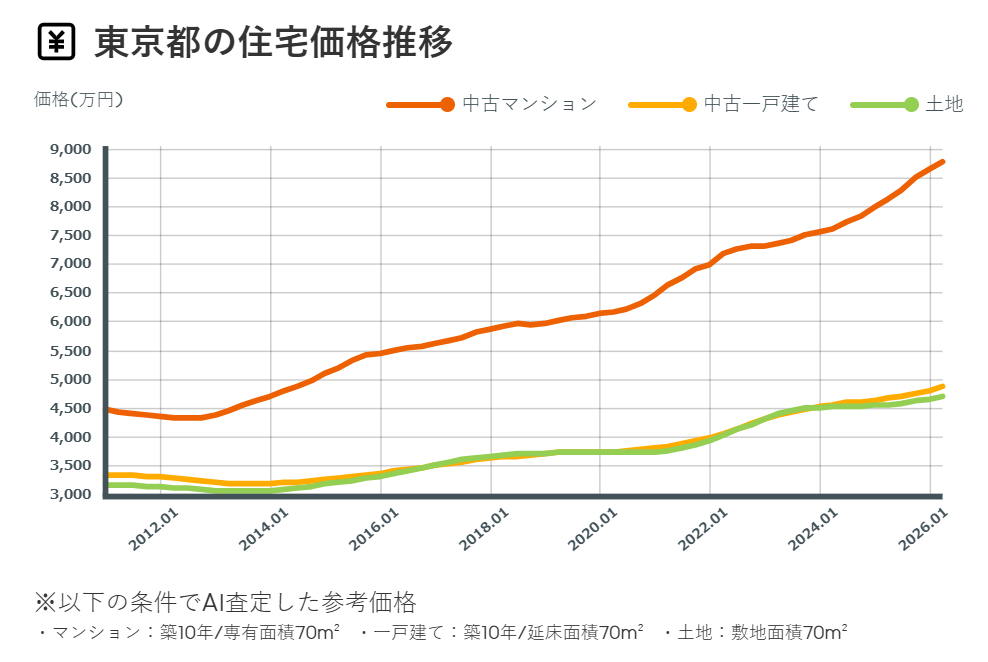
Tokyo remains attractive to real estate investors because rental demand continues to support the market. Rental prices in Tokyo have been trending upward, especially in well-connected areas with strong access to business districts, universities, and lifestyle amenities.
For overseas investors, this means Tokyo can offer stable rental income opportunities, particularly for compact units such as studios, 1R, 1K, and 1DK apartments. Larger units in central wards also remain in demand among families, executives, and foreign residents.
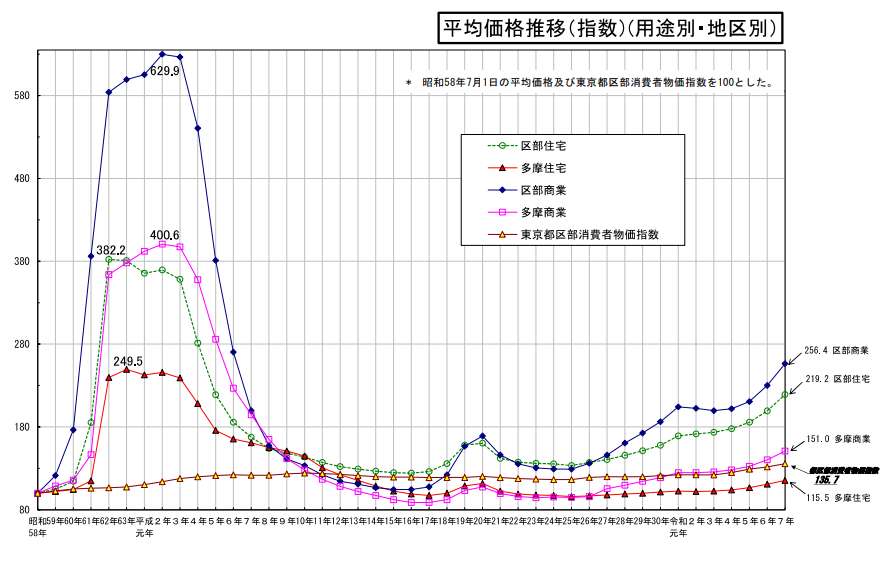
Land prices in Tokyo also continue to show strength. According to the Tokyo Metropolitan Government’s 2025 land price overview, key areas supported by redevelopment, commercial activity, and infrastructure improvements have maintained an upward trend.
Central wards such as Minato, Chiyoda, Chuo, Shibuya, and Shinjuku remain especially competitive due to their limited supply, strong transport access, and concentration of offices, retail, hotels, and luxury residences. For investors, this supports the potential for long-term asset value, although purchase price, rent, and holding costs should always be carefully compared.
Ongoing redevelopment is another reason Tokyo continues to attract attention. Major projects in areas such as Toranomon, Azabudai, Shibuya, Shinagawa, Yaesu, and Nihonbashi are adding offices, hotels, retail spaces, luxury residences, and public amenities, further increasing the appeal of central Tokyo.
For buyers from Singapore and Southeast Asia, Tokyo offers a strong combination of safety, transport convenience, legal stability, and long-term rental demand. In 2026, the city’s investment appeal can be summed up in three key trends: rising rents, firm land prices, and continued redevelopment.
Singaporeans can legally purchase property in Tokyo, even without Japanese residency. The process is relatively straightforward, but overseas buyers should confirm the required documents, taxes, closing costs, and financing options before making an offer.
Foreign buyers can own real estate in Japan without a special visa. However, non-residents may need to prepare additional documents, such as proof of identity, proof of address, and certified or notarized documents from Singapore.
The typical process includes submitting a purchase application, reviewing the explanation of important matters, signing the sales contract, paying a deposit, and completing final settlement and ownership registration. An English-speaking real estate agency and an experienced judicial scrivener can help guide buyers through the Japanese-language procedures.
In addition to the purchase price, buyers should budget for closing costs and real estate taxes, including brokerage fees, stamp duty, registration tax, judicial scrivener fees, acquisition tax, and other settlement costs.
After purchase, owners should also plan for annual fixed asset tax, city planning tax, building management fees, and repair reserve contributions. Non-resident owners may also need tax support in Japan, especially if they plan to rent out the property.
Singaporeans may be able to apply for a mortgage in Japan, but approval is generally easier for buyers with Japanese residency, local income, or a strong financial profile. Many non-resident buyers choose to purchase in cash or arrange financing outside Japan.
Before selecting a property, confirm your mortgage options, down payment, interest rate, repayment plan, and required documents with a lender or a real estate agency experienced in supporting overseas buyers.
Guide to Buy Property in Japan for Singaporeans
※This section provides a general overview. Requirements, taxes, and financing conditions vary by buyer, property, lender, and transaction structure. Professional advice is recommended before purchase.

Minato Ward, the international center of Tokyo, is home to luxury residences, foreign corporate offices, and numerous embassies. As a result, major redevelopment projects like Azabudai Hills are underway, and the area is known for its high concentration of foreign residents. The market includes high-rise condominiums, low-rise luxury apartments, and rare detached homes, making it an ideal option for capital gains, rental income, or relocation by ultra-high-net-worth individuals. With access to multiple train lines and convenient connections to Haneda Airport, Minato offers both high livability and strong investment potential.
As of May 2024, condominium prices in Minato Ward in average ¥1,700,000 per square meter and above, while rental rates typically fall between ¥300,000 and ¥1,000,000 per month and above.

Chuo Ward is where commerce and history blend seamlessly, with areas like Ginza and Nihonbashi offering some of the highest levels of convenience in central Tokyo. Meanwhile, the bayside neighborhoods of Tsukishima, Kachidoki, and Harumi are undergoing major redevelopment. The area offers investment opportunities in high-rise condominiums, privately owned apartments, and commercial buildings—making it well-suited for investors seeking capital gains as well as those looking to live in the heart of the city.
The area is served by a wide range of train lines—including the Ginza, Hibiya, Tozai, Asakusa, and Oedo lines—providing excellent connectivity. Easy access to Tokyo Station and Shinkansen lines further enhances its convenience, making Chuo Ward an attractive option both for investment and for residents who prioritize accessibility.

The Ebisu, Daikanyama, and Omotesando areas of Shibuya Ward are highly sought-after upscale residential neighborhoods known for their refined atmosphere. Redevelopment efforts have also strengthened the district’s business functions, earning strong recognition from foreign investors. Property options include privately owned condominiums, designer apartments, and some detached homes, making the area ideal for lifestyle-focused investors and those seeking a high-quality urban living environment.
With access to multiple train lines—including the JR Yamanote and Saikyo lines, as well as the Ginza, Hanzomon, and Fukutoshin subway lines—the area offers excellent connectivity to all parts of Tokyo.

Shinjuku Ward offers a diverse character, combining entertainment and commercial district around Shinjuku Station with the tranquil surroundings of Shinjuku Gyoen and the historic charm of Kagurazaka. The area features high-rise condominiums, privately owned apartments, and some detached homes, making it well-suited for investors focused on rental income as well as those seeking to live in central Tokyo.
With access to major lines such as the JR Yamanote Line, Chuo Line, Odakyu Line, Keio Line, Marunouchi Line, and Oedo Line, the area benefits from one of Japan’s most prominent terminal stations, offering unmatched convenience for getting anywhere in the city.
As of May 2024, condominium prices in Shinjuku Ward range from ¥1,200,000 to ¥2,000,000 per square meter, while rental rates typically range from ¥150,000 to ¥500,000 per month.

Meguro and Setagaya Wards are well known for their quiet, residential neighborhoods and are especially popular among families and those raising children. The area mainly features privately owned condominiums and detached houses, making it an ideal choice for investors focused on rental income as well as families seeking long-term residence.
With access to multiple train lines—including the Tokyu Toyoko Line, Den-en-toshi Line, and the JR Yamanote Line via Meguro Station—these areas offer excellent connectivity to central Tokyo. The abundance of green parks and the calm, residential atmosphere add to their appeal.

Toshima, Itabashi, and Koto Wards offer excellent access to central Tokyo while featuring relatively affordable property prices, making them attractive for cost-conscious investors. These areas are home to a large number of privately owned and family-oriented condominiums, appealing to those focused on rental income or higher yields. In Toshima Ward, redevelopment is underway in the Ikebukuro area, while in Koto Ward, large-scale residential projects are progressing along the bayside—both contributing to the potential for future property value appreciation.
These areas are served by the JR Yamanote Line, Tokyo Metro, and Toei Subway, offering smooth and convenient access to central Tokyo.
For overseas investors, buying the right property is only the first step. To protect rental income and improve long-term returns, professional management, tenant support, and strategic upgrades are essential.
A professional property management company can handle daily operations on behalf of the owner, including tenant screening, rent collection, maintenance, repairs, and communication with building management. This is especially important for investors who live outside Japan and cannot respond quickly to issues on-site.
Overseas owners may also need support with tax documents, payment management, vacancy measures, and reporting in English. A reliable local partner can help reduce operational stress and keep the property running smoothly, even when the owner is based in Singapore or elsewhere in Southeast Asia.
Small upgrades can make a major difference in Tokyo’s competitive rental market. Renovating older interiors, improving storage, adding modern fixtures, or furnishing the unit for expatriate tenants can help increase appeal, reduce vacancy periods, and support higher rental income.
When considering purchasing real estate in Tokyo, the first and most crucial step is to consult a trustworthy real estate agency. This is because real estate transactions in Japan involve unique practices as well as complex legal and tax frameworks. For foreign buyers, additional challenges such as language and cultural differences, as well as hurdles in securing financing, can also arise. Having an experienced and knowledgeable partner who can navigate all of these aspects on your behalf is essential to a successful purchase.
Specifically, be sure to check the following key points.
Additionally, having a one-stop service structure that can support post-purchase rental management, interior design and furniture coordination, as well as provide guidance on operating vacation rentals, can greatly enhance both investment efficiency and convenience. Choosing the right partner that best matches your individual needs is the smartest first step toward a smooth and secure property investment or second home purchase in Tokyo.
3 Trusted Agencies for
Buying Property in Japan
as a Foreigner
We introduce recommended real estate services tailored to your goals—whether you're looking to invest, explore exclusive luxury properties, or find a comfortable home within your budget.
Use this guide to help you make the right choice in Japan’s real estate market.
Advertiser Disclosure:
We receive compensation from some of the companies listed below.This compensation may affect which companies are included and the order in which they appear.

From brokerage to management and valuation, they offer a wide range of real estate services.
Backed by Nomura Securities' network and insights, they enables investment-focused proposals that take into account both current returns and long-term growth potential.
Major metropolitan areas across Japan
(Tokyo 23 wards, Nagoya, Osaka, Kyoto, Kobe, Sapporo, Fukuoka, etc.)

The first and only partner in Japan (*1) of Forbes Global Properties, an international luxury platform that only allows membership to top real estate companies from each country.
They selectively introduce penthouses, resorts, and condominiums priced over USD 2 million.
Tokyo’s prime districts, top resort areas like Hakuba, Furano, and Niseko.

Real Estate Japan is one of the largest portal sites in Japan with property listings for foreigners (*2), where you can research desired real estate properties by preferred area, requirements, and features.
With diverse affordable housing options available, you can easily find a home that matches your needs.
Nationwide
(*1) Source: TonTon Forbes Global Properties (https://tonton-inc.com/news/notice/3865)
(*2) Source: realestatejapan (https://realestate.co.jp/en), as of May 29, 2025