Hyogo Prefecture, home to major cities like Kobe and coastal towns, combines scenic variety with close access to Osaka and Kansai International Airport via rail and expressway networks, making it an attractive gateway for foreign homebuyers and investors.
The following data is based on market information published by Hatomark Site as of June 5, 2026.
| Area | Average Price per Tsubo | Studio / 1R | 1K / 1DK | 1LDK / 2K / 2DK | 2LDK / 3K / 3DK | 3LDK / 4K / 4DK | 4LDK or Larger |
|---|---|---|---|---|---|---|---|
| Kobe City, Chuo Ward | Approx. ¥2.45 million | ¥49,000 | ¥55,500 | ¥82,800 | ¥151,400 | ¥149,300 | ¥280,000 |
| Ashiya City | Approx. ¥1.57 million | ¥54,700 | ¥63,000 | ¥80,600 | ¥108,000 | ¥190,200 | ¥298,000 |
| Kobe City, Hyogo Ward | Approx. ¥1.40 million | ¥42,000 | ¥52,500 | ¥62,600 | ¥72,100 | ¥85,600 | ¥78,000 |
| Takarazuka City | Approx. ¥1.29 million | ¥40,500 | ¥48,800 | ¥63,600 | ¥70,100 | ¥158,900 | ¥115,100 |
Hyogo’s property market shows a clear concentration of value in premium residential and urban districts.
Kobe City’s Chuo Ward records the highest average price per tsubo, reflecting its role as the commercial and lifestyle center of the prefecture, with strong access to transport, offices, retail, and waterfront amenities.
Ashiya also remains one of the most prestigious residential areas in western Japan, supported by high-end housing demand and larger family-oriented rental units.
For investors, the data suggests that central Kobe may offer stronger liquidity and tenant demand, particularly for compact apartments such as studios and 1K units. In contrast, Ashiya and Takarazuka may appeal to investors seeking larger family-type properties in established residential neighborhoods. Overall, Hyogo offers a balanced mix of urban rental demand, luxury residential appeal, and relatively more accessible pricing compared with central Tokyo or Osaka.
Strong rental demand, steady land price growth, and large-scale urban redevelopment projects continue to support Hyogo’s real estate market in 2026.
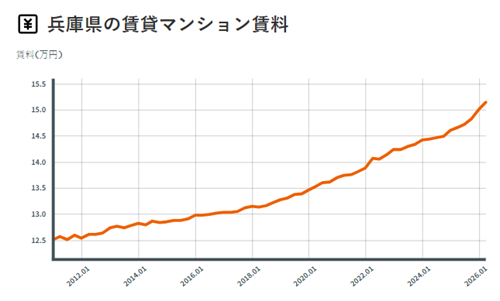
Hyogo Prefecture has experienced a steady increase in apartment rents over the past three years. According to LIFULL HOME'S data, average condominium rents in the prefecture have risen by approximately 5.95% during the period, with growth accelerating in recent years. Areas such as Kobe's Chuo Ward, Ashiya, Nishinomiya, and Higashinada Ward continue to attract tenants due to their convenient transportation access, high-quality residential environments, and proximity to Osaka's business districts. Rising rents are particularly important for investors because they directly support stronger rental yields and long-term cash flow. Compared with Tokyo's highly competitive market, Hyogo still offers relatively affordable acquisition costs while maintaining healthy tenant demand, creating an attractive balance between income generation and capital appreciation.
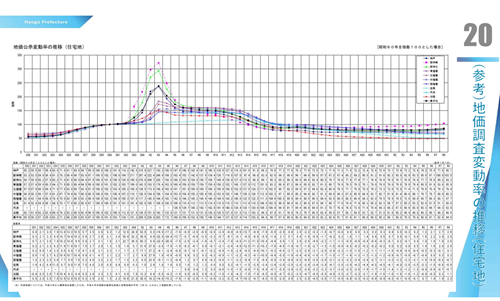
Recent land price surveys indicate that Hyogo's property market remains on a stable growth trajectory. Prime residential and commercial districts within Kobe, Ashiya, Nishinomiya, and areas along major railway corridors have continued to record positive land value movements. The market benefits from strong connectivity to Osaka, a diversified local economy, and a high quality of life that attracts both residents and businesses. Unlike highly volatile investment destinations, Hyogo's land market has generally demonstrated moderate and sustainable growth. This stability is particularly attractive to overseas investors seeking long-term wealth preservation and reduced downside risk while maintaining exposure to Japan's major urban regions.
Several large-scale redevelopment projects are helping reshape Hyogo's investment landscape. Kobe continues to strengthen its position as an international waterfront city through urban renewal initiatives around Sannomiya Station, the waterfront district, and surrounding commercial zones. Transportation upgrades, mixed-use developments, office expansion projects, and tourism-focused investments are improving the city's attractiveness to both residents and businesses. These projects are expected to enhance foot traffic, increase employment opportunities, and support future housing demand. At the same time, neighboring cities such as Nishinomiya and Ashiya continue to benefit from their strategic location between Kobe and Osaka. As redevelopment progresses and infrastructure improves, investors may find opportunities to enter growth areas before property values fully reflect the long-term benefits of these projects.
One of Japan's major advantages for overseas investors is its transparent and straightforward property acquisition process. Unlike many countries in Asia, Japan places very few restrictions on foreign ownership, making it relatively easy for Singaporean investors to purchase residential, commercial, or investment properties in Hyogo. Understanding the legal requirements, transaction costs, and financing options can help ensure a smooth and successful purchase.
Singaporean citizens can legally purchase real estate in Hyogo without obtaining Japanese residency, permanent residency, or a business visa. Foreign buyers enjoy essentially the same ownership rights as Japanese citizens, including the ability to own both buildings and land under freehold ownership.
The required documentation is relatively simple and typically includes a valid passport, proof of address, and an affidavit verifying the buyer's identity and signature. Since non-residents generally do not possess a Japanese seal (hanko), legal documents are usually notarized in Singapore and submitted through a judicial scrivener during the registration process. Most overseas investors also appoint a local tax representative to assist with tax-related procedures after the purchase.
The buying process typically involves property selection, due diligence, signing a purchase agreement, payment of a deposit, settlement, and registration of ownership with the Legal Affairs Bureau. The entire transaction can often be completed within four to eight weeks, depending on the property's condition and financing arrangements.
Investors should budget for additional acquisition costs beyond the purchase price. In Japan, total closing costs generally range between 6% and 10% of the property value, depending on the asset type and financing structure.
Common acquisition costs include registration and license tax, judicial scrivener fees, real estate acquisition tax, stamp duty, and brokerage commissions. Brokerage fees are typically calculated according to a regulated formula and represent one of the largest transaction expenses.
After purchase, owners are responsible for annual fixed asset tax and city planning tax. Condominium owners may also pay monthly building management and repair reserve fees. Compared with Singapore, where Additional Buyer's Stamp Duty (ABSD) can significantly increase acquisition costs, Japan's tax structure is generally considered more straightforward for foreign investors.
While cash purchases remain common among overseas buyers, Singaporeans may also be eligible for financing through selected Japanese and international lenders. Mortgage availability depends on factors such as residency status, income level, net worth, and the type of property being purchased.
Non-resident borrowers often face stricter lending requirements than Japanese residents. Many domestic banks primarily lend to permanent residents or long-term visa holders. However, several private banks, international financial institutions, and specialist lenders offer financing solutions specifically designed for foreign investors.
Loan-to-value ratios typically range from 50% to 80%, while interest rates vary depending on the lender and borrower profile. Investors seeking financing are generally advised to obtain preliminary approval before beginning their property search. For high-net-worth Singaporean investors, private banking relationships may also provide access to cross-border financing options that can improve capital efficiency and overall investment returns.
Guide to Buy Property in Japan
for Singaporeans
 Source:Kobe City Official Website
(https://www.city.kobe.lg.jp/)
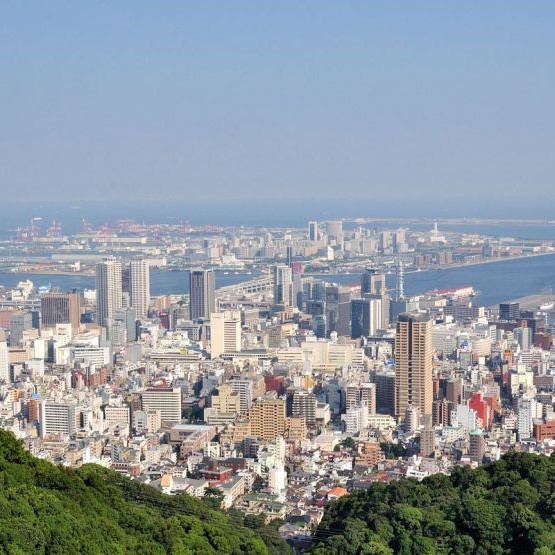
Kobe is well known for its combination of urban convenience and coastal lifestyle, appealing to both investors and owner-occupiers. With a population of around 1.5 million, the city maintains stable housing demand supported by ongoing redevelopment projects, particularly around Sannomiya and the central wards. These areas benefit from strong transport connectivity, commercial revitalization, and consistent rental demand, helping sustain property values over the long term.
 Source:Ashiya Tourism Association Website
(https://www.ashiya-kankou.com/guide/)
Ashiya is widely regarded as one of Japan’s most prestigious residential cities, and Rokurokuso (六麓荘) represents its most exclusive neighborhood. Characterized by large plots, strict building regulations, and a low-density residential environment, Rokurokuso has long attracted affluent homeowners. Limited land supply, combined with strong brand recognition and its prime location between Kobe and Osaka, contributes to highly resilient land prices and long-term investment stability.
 Source:Nishinomiya City Official Website
(https://www.nishi.or.jp/index.html)
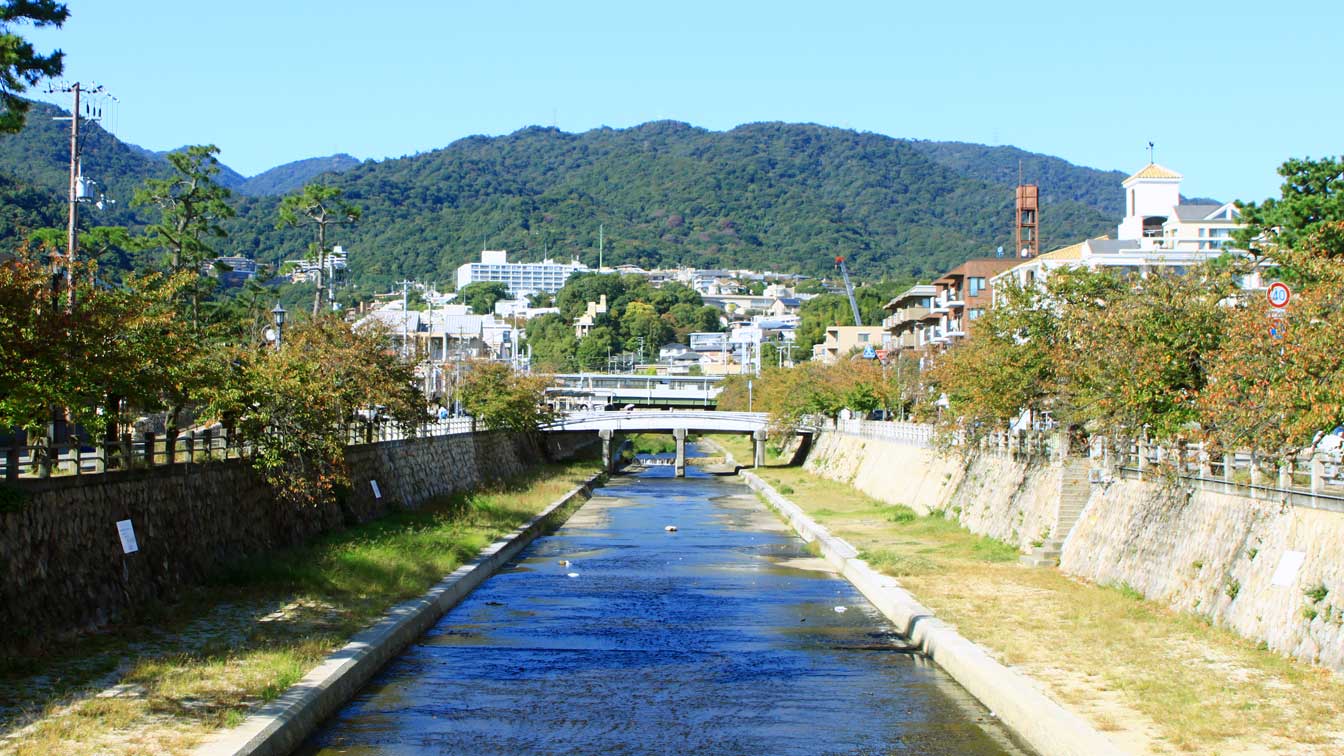
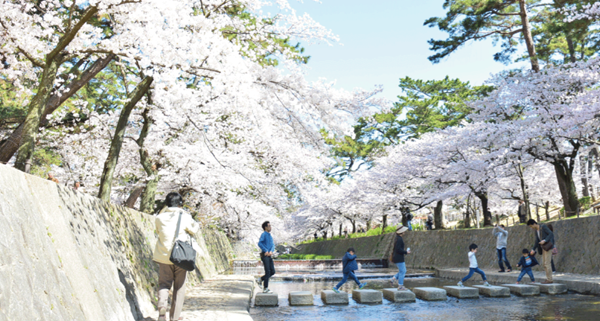
Nishinomiya is often ranked among Kansai’s most desirable residential cities, offering excellent rail access to Osaka via the Hankyu and JR lines. Kurakuen (苦楽園), in particular, is known for its hillside setting, spacious homes, and refined residential atmosphere. The area’s appeal to high-income households, coupled with controlled development and consistently strong demand, has supported steady land value appreciation and solid long-term property fundamentals.
Successful real estate investing in Hyogo is not just about buying in the right location. Long-term returns are heavily influenced by occupancy rates, tenant retention, and effective property management. While property values may appreciate over time, overseas investors should remember that exchange rate fluctuations between the Japanese yen and Singapore dollar can significantly affect realized returns. As a result, maintaining stable rental income is often the most reliable strategy for maximizing overall investment performance.
One of the biggest risks for property investors is prolonged vacancy. Even in desirable markets such as Kobe, Ashiya, and Nishinomiya, an empty property generates no income while fixed costs such as taxes, maintenance fees, and insurance continue to accumulate. For this reason, professional property management plays a critical role in protecting investment returns.
A reputable property management company handles tenant recruitment, rent collection, contract renewals, maintenance coordination, and vacancy reduction strategies. Local managers also have a deep understanding of market rental levels and tenant preferences, helping owners maintain competitive pricing while minimizing turnover. For overseas investors, strong occupancy rates often have a greater impact on total returns than short-term property price appreciation.
Managing a property from Singapore can be challenging without reliable local support. Language barriers, legal procedures, tenant communication, and emergency maintenance issues can quickly become difficult to handle remotely. Professional management companies bridge this gap by acting as the owner's local representative.
Many firms in Hyogo offer services specifically designed for international investors, including bilingual communication, monthly financial reporting, tax support, rent remittance, and coordination with local contractors. This allows investors to monitor performance and make informed decisions without needing to travel frequently to Japan. A well-structured management arrangement can significantly reduce operational risks while providing peace of mind for overseas owners.
Strategic renovations can be one of the most effective ways to improve rental income and reduce vacancy periods. In Japan's competitive rental market, tenants increasingly prioritize modern interiors, functional layouts, updated kitchens and bathrooms, and energy-efficient features.
Rather than focusing solely on property appreciation, investors should consider improvements that directly increase rental demand and tenant satisfaction. Even relatively modest upgrades such as flooring replacement, lighting improvements, fresh wall finishes, and modern fixtures can help a property command higher rents and attract higher-quality tenants. For older properties, targeted renovations may also extend the building's economic lifespan and improve long-term profitability. When executed correctly, value-add improvements can generate returns that exceed the initial renovation costs while strengthening the property's competitive position in the local market.
Ultimately, investors should view rental income as the primary driver of returns. While capital gains are welcome, currency fluctuations between the Japanese yen and Singapore dollar can partially offset gains when profits are converted back to Singapore dollars. Maintaining high occupancy rates, maximizing rental income, and preserving tenant satisfaction are therefore essential components of a successful Hyogo real estate investment strategy.
When choosing a property agency in Kobe, overseas investors should look for firms that meet the following six key criteria:
Agencies that meet these criteria can offer a comprehensive investment strategy—including cost breakdowns, tax planning, and exit strategies—allowing foreign investors to confidently take their first step into the Fukuoka property market.
3 Trusted Agencies for
Buying Property in Japan
as a Foreigner
We introduce recommended real estate services tailored to your goals—whether you're looking to invest, explore exclusive luxury properties, or find a comfortable home within your budget.
Use this guide to help you make the right choice in Japan’s real estate market.
Advertiser Disclosure:
We receive compensation from some of the companies listed below.This compensation may affect which companies are included and the order in which they appear.

From brokerage to management and valuation, they offer a wide range of real estate services.
Backed by Nomura Securities' network and insights, they enables investment-focused proposals that take into account both current returns and long-term growth potential.
Major metropolitan areas across Japan
(Tokyo 23 wards, Nagoya, Osaka, Kyoto, Kobe, Sapporo, Fukuoka, etc.)

The first and only partner in Japan (*1) of Forbes Global Properties, an international luxury platform that only allows membership to top real estate companies from each country.
They selectively introduce penthouses, resorts, and condominiums priced over USD 2 million.
Tokyo’s prime districts, top resort areas like Hakuba, Furano, and Niseko.

Real Estate Japan is one of the largest portal sites in Japan with property listings for foreigners (*2), where you can research desired real estate properties by preferred area, requirements, and features.
With diverse affordable housing options available, you can easily find a home that matches your needs.
Nationwide
(*1) Source: TonTon Forbes Global Properties (https://tonton-inc.com/news/notice/3865)
(*2) Source: realestatejapan (https://realestate.co.jp/en), as of May 29, 2025